Quiz Results Page: Examples & Design Tips for Every Quiz Type

Quizzes are irresistible. Once you start, you have to see how it ends. But while the questions get people hooked, the real impact of a quiz happens after the final click – on the results page.
A strong results page guides users toward taking real action, whether that’s sharing their result, exploring recommended content or products, or taking the next step with your brand.
In this guide, we’ll break down how to create an effective quiz results page, depending on the quiz type and your goals.
What is a Quiz Results Page?
A quiz results page is the final screen people see after completing a quiz. It shows their outcome, such as a score or a recommendation (depending on the quiz type), and explains what it means. When the results page brings value to a user, it can encourage clicks, shares, email sign-ups, and purchases. Since interactive quizzes come in various formats, like personality, trivia, or lead generation, results pages can look a bit different. But the goal is always the same: deliver a clear result and guide the next step.
With that in mind, let’s take a closer look at how different types of quiz results pages work and what to include in each one.
Personality Quiz Results Page
When someone lands on a personality quiz result, they should instantly think, “Yep, that sounds like me.” To create that feeling, speak directly to the reader using “you” and “your,” and keep the tone friendly and lightly flattering. The result should feel as if it were written specifically for them.
A personality quiz results page should include:
- Personality types with unique names people are more likely to remember, relate to, and talk about.
- Short description that explains what the personality means in a clear, relatable way.
- Key traits that highlight characteristics people easily recognize in themselves.
- Next step which turns interest into action with relevant recommendations.
Say you’re building a personality-style quiz to help people discover their travel style. The results might include personalities like The Planner, The Adventurer, The Luxury Traveler, or The Spontaneous Explorer. Each result clearly names the travel personality, explains what it says about how someone likes to plan and experience trips, and highlights a few defining traits. From there, you can suggest tailored next steps, such as destination ideas, travel tips, or curated deals that match the traveler’s style.
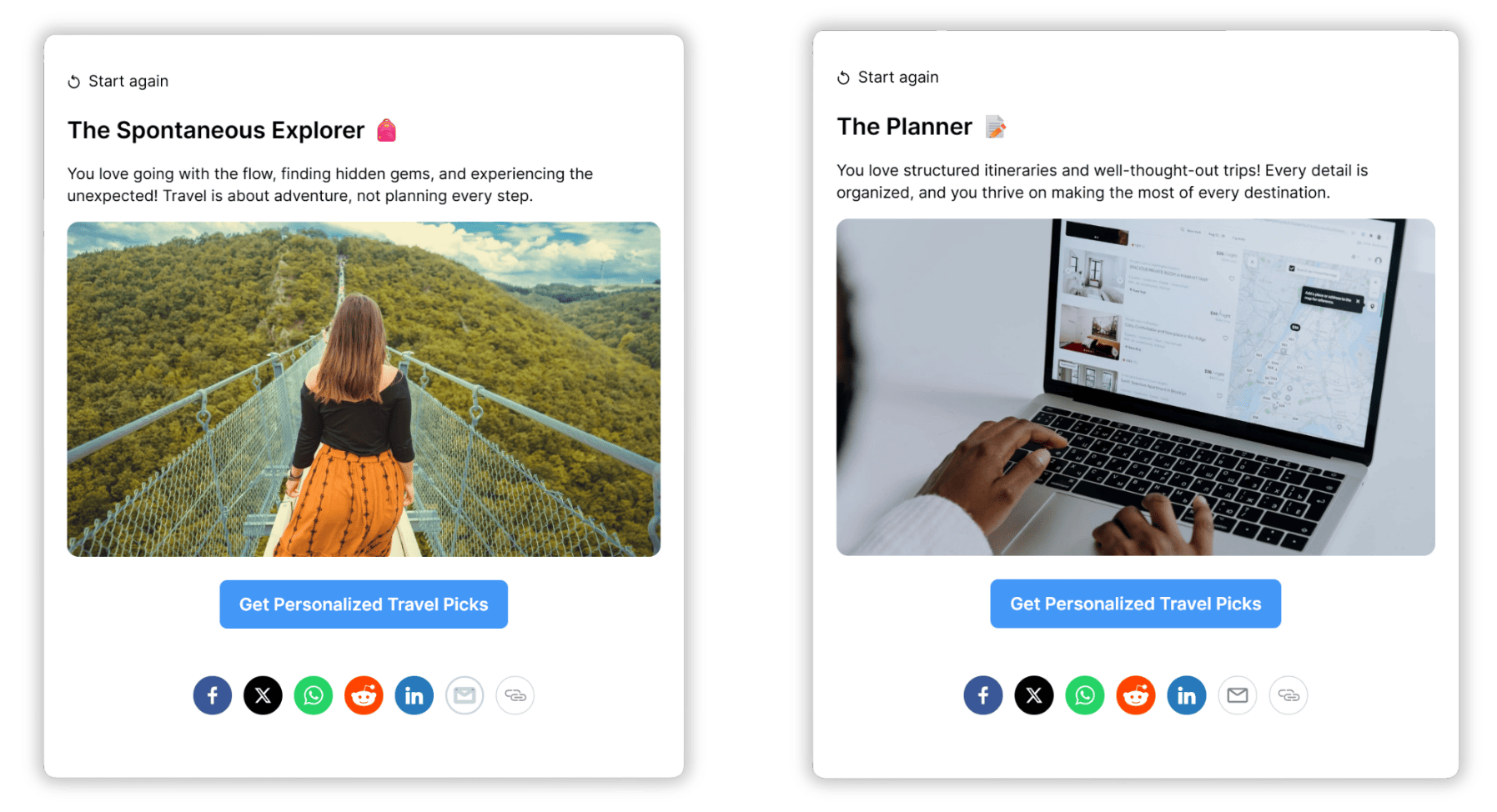
Want to see this in action? Try our Opinion Stage travel personality quiz below and see what result you get!
E-commerce Quiz Results Page
The goal of an e-commerce results page is to help people feel confident about what to buy. Instead of overwhelming shoppers with too many choices, it reduces decision fatigue by pointing them toward products that fit their needs.
Depending on your catalog and goals, in your product recommendation quiz you can recommend either a single product or a small selection of options.
One Product Recommendation Result Page
This format is best suited for high-consideration or premium products, where a single, clear recommendation feels reassuring.
A one-product results page should include:
- Product name
- Short product description
- Why this product is a good fit
- Clear call to action, like Shop now or View product
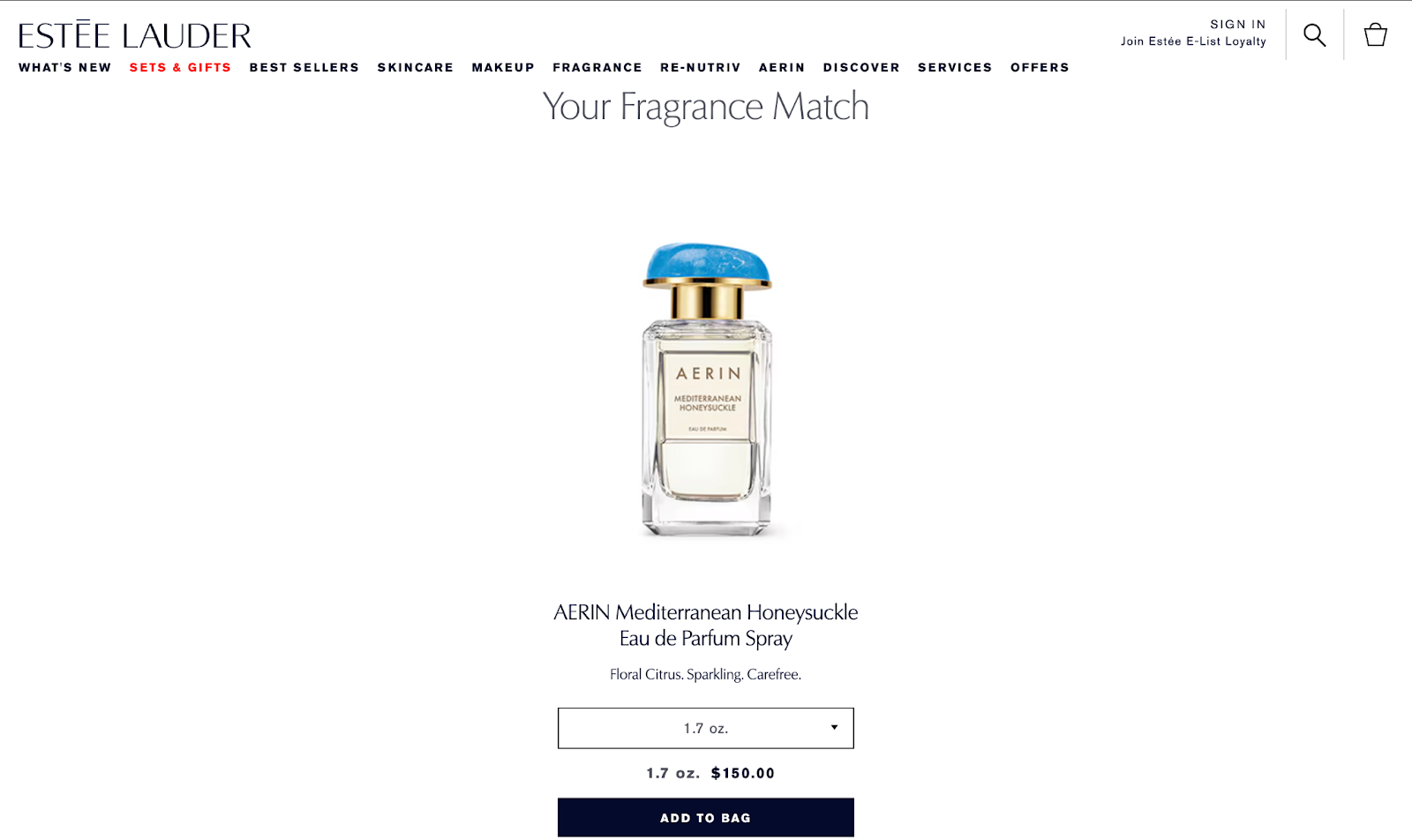
For example, Estée Lauder uses a fragrance quiz results page to recommend a single, premium perfume based on a person’s scent preferences. The customized results page clearly presents the product, explains why it’s a good match (using scent notes and mood descriptors), and removes guesswork by guiding people straight to a confident purchase decision with a clear “Add to bag” CTA.
Multiple Product Recommendations Result Page
Such result pages work best for larger catalogs and brands with multiple product lines. Instead of suggesting one item, the results page helps users explore a small, curated set of options that work well together.
A multiple-product results page should include:
- Short list of products (ideally 2-4 items)
- Brief descriptions explaining the role of each product
- Clear visual hierarchy, with a top pick and supporting products
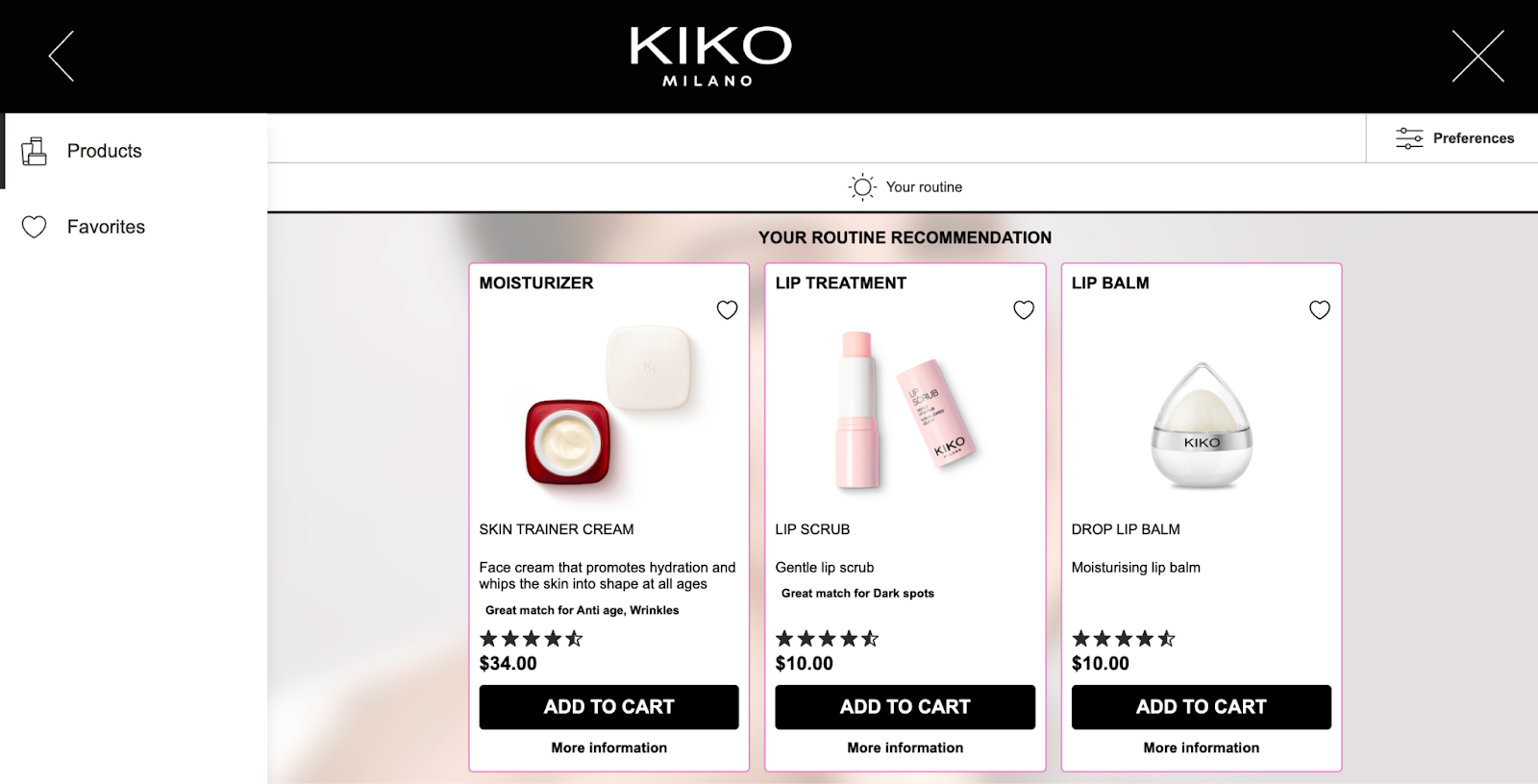
KIKO Milano presents quiz results as a simple skincare routine, grouping complementary products together so shoppers can confidently choose what to use – and add – based on their needs.
Lead Generation Quiz Results Page
If your goal is to generate leads, the results page should balance value with conversion. In most lead generation quizzes, contact details are collected before the results are shown, so the results page focuses on delivering something genuinely useful and guiding people toward a natural next step.
That means clearly explaining the result and helping people see what to do next. This can be subscribing to a newsletter, downloading a resource, or booking a call.
A lead generation results page should include:
- Clear result and explanation of what that result means
- One primary CTA tied to the lead goal, such as Get the guide, See tips, or Claim your coupon
- Optional supporting context explaining why this next step is helpful
Need inspiration for your own lead generation quiz? Try the Opinion Stage quiz below!
Trivia Quiz Results Page
Most trivia quizzes aim at keeping the experience enjoyable and shareable, without deep analysis. So, the results pages should instantly tell people how they did and make it feel fun and encouraging, even if the score isn’t great.
A trivia quiz results page should include:
- Score or grade, displayed clearly and upfront
- Short custom message, like “Nice try” or “You really know your stuff”
- Restart button so people can replay the quiz
- Sharing options to encourage interaction beyond the result
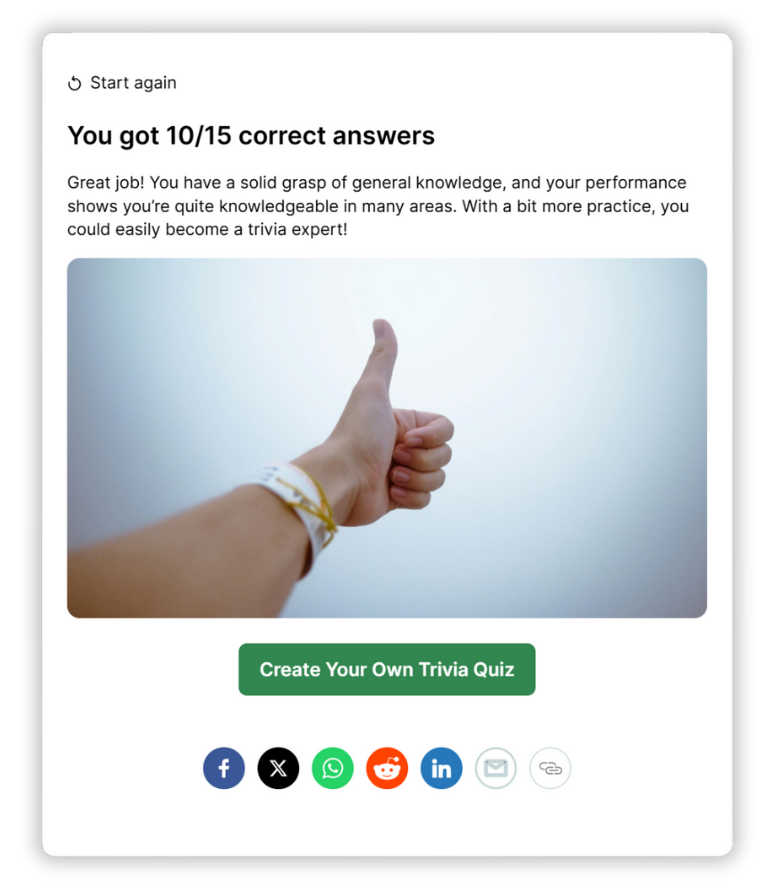
Trivia questions can cover anything, from geography to chemistry or general knowledge. The results page can simply show a score, add a playful message based on how the user did, and invite them to retake the quiz or challenge their friends.
Design Tips for High-Converting Quiz Results Pages
Now that we’ve covered different types of quiz results pages, let’s look at a few design tips to help them perform better.
✅ Use visuals to reinforce the result
Visuals make results easier to process quickly. Using a product image, icon, or simple graphic helps clarify what the result means without relying on extra text.
❌ Don’t: Avoid purely decorative visuals. Images that don’t reinforce the result can feel distracting and make the page feel visually confusing.
✅ Make the result feel clear and credible
People should immediately understand why they got this result. An explanation builds confidence and helps the result feel earned, not random.
❌ Don’t: Present results without context. When results appear without explanation, people may question their accuracy or dismiss them altogether.
✅ Keep content focused
Results pages perform better when they stay short and focused. People want to understand their results at a glance, not read long explanations.
❌ Don’t: Extra content increases cognitive load and decision fatigue, which can stop users from taking the next step. If your results need more detail, consider linking to a follow-up page or sending deeper explanations by email instead.
✅ Make the next step obvious
A strong results page clearly points to one main action. The CTA should match the intent of the quiz and feel like a natural continuation of the experience.
For example, trivia quizzes work best with sharing or retry CTAs, while product quizzes can lead to viewing or buying a product.
❌ Don’t: Use a CTA that doesn’t match the result. When the next step feels unrelated to the outcome, people are less likely to act.
Final Thoughts: Making Quiz Results Work
A quiz results page isn’t just a summary of answers. It’s where people make sense of what they learned and decide what to do next. When that moment is clear, useful, and aligned with intent, people are far more likely to act.
For creators and marketers, using a quiz maker helps turn that final moment into something intentional, whether that’s exploring content, discovering products, or guiding users toward a meaningful next step.
Ready to create your own quiz?