How Quizzes Can Boost Your Search Marketing Strategy

Search marketers are great at getting people to click. Writing the right titles and matching search intent brings visitors to the page. But getting people to stay isn’t always as easy.
Quizzes help you make the most of that traffic by turning passive visitors into active participants. In doing so, they strengthen the engagement signals that search engines use to evaluate content quality, making them valuable not just for engagement, but also for SEO and AEO.
This isn’t just theory. According to research from the Content Marketing Institute, 81% of marketers stated that interactive content captures attention more effectively than static content, and 66% reported an increase in audience engagement after adopting it.
In this article, we’ll look at why quizzes work so well for search marketing and how you can use them to get more engagement from the traffic you’re already earning.
Why SEO/AEO Ranking Requires On-Page Engagement
For years, SEO success was measured by rankings, keywords, and backlinks. And those things still matter. But they’re no longer the full picture.
Today, Google doesn’t just evaluate whether your page matches a query. It looks at what happens after someone clicks. Do they stay? Do they interact? Do they move forward or bounce back to search results?
This shift matters not only for SEO but also for AEO (Answer Engine Optimization). Large language models and AI-powered search experiences increasingly rely on content that demonstrates clear usefulness, depth, and engagement when deciding what to cite or surface as an answer.
In other words, search engines and answer engines don’t just rank content anymore. They reward experiences that keep users engaged and signal real value.
That’s where many search strategies still fall short.
Engagement Signals Matter More Than Ever
When someone lands on your page from search, Google can see how they behave. Signals like these help paint the picture:
- Time on page – Do people actually spend time with your content?
- Bounce rate – Do they leave right away or continue exploring?
- Pages per session – Does your page lead them to additional pages on your site?
- Return visits – Do they come back?
These signals don’t exist in isolation, but together they help search engines understand whether your page delivered value or disappointed.
The Real Challenge After the Click
Most SEO content does a solid job answering a question. But answering a question isn’t always enough to keep someone engaged.
Search visitors often:
- Skim instead of read
- Scroll without interacting
- Leave as soon as they find a partial answer
Not because the content is bad, but because it’s passive.
The real challenge for search marketers isn’t getting the click anymore. It’s this:
How do you get people to actually stay, interact, and care once they arrive?
From Content to Experience
Instead of asking people to read more, interaction asks them to participate. Instead of scanning, they click, answer, and progress. The page becomes something they do, not just something they consume.
What this looks like in practice:
| Before: Passive content | After: Interactive experience |
| Visitor skims for an answer | Visitor clicks to start |
| Scrolls without interacting | Answers questions and progresses |
| Leaves once they’ve found enough | Completes the experience and takes a next step |
Quizzes fit naturally into this shift. Not as a gimmick, but as an engagement engine that turns search traffic into an experience people want to finish.
SEO is no longer about getting the click. It’s about earning the stay.
In the next section, we’ll look at why quizzes are one of the most effective ways to close this engagement gap and how different quiz approaches support search performance.
Why Quizzes are Great for On-Page Engagement
Quizzes work so well for on-page engagement because they align with how people naturally behave online, not because they follow SEO best practices on paper.
Why Quizzes Work (Human Behavior, Not Theory)
From a user’s point of view, quizzes feel easy, personal, and rewarding. That’s why people are drawn to them in the first place.
Before anyone answers a question, the experience already feels different. A quiz doesn’t ask for time or commitment up front. It asks for a single, low-effort click. That first interaction feels fast, safe, and curiosity-driven, which is why quizzes earn clicks so easily across search results, blog pages, and social feeds.
Quizzes work because they:
- Spark curiosity: There’s a clear question at the start: “What will I get?” That alone is often enough to earn the first click.
- Feel personal, even at scale: Answering questions makes the experience feel personalized, even when thousands of people take the same quiz.
- Are easy to start and hard to abandon: One question at a time lowers the mental effort required. There’s no wall of text to commit to.
- End with a reward moment: Results give people closure, insight, or validation, which makes the experience feel worth their time.
This isn’t abstract psychology. It’s how quizzes are built to work. By turning reading into interaction and progress into a goal, quizzes keep users engaged in ways traditional content simply can’t.
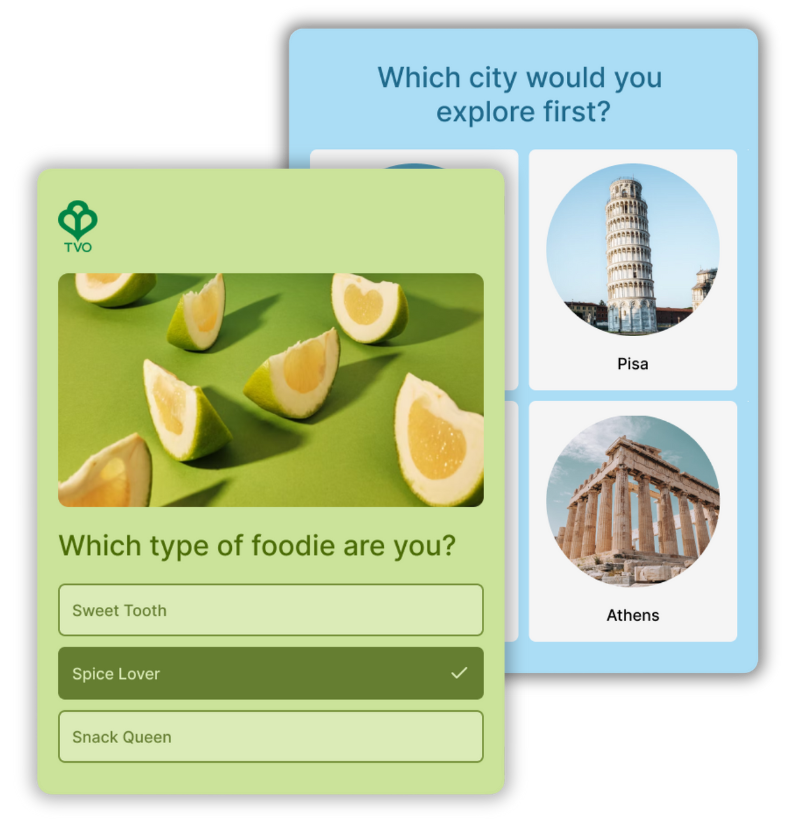
Ready to see what quizzes can do?
How Quiz Engagement Translates Into SEO Signals
Quizzes naturally strengthen engagement signals, not through optimization tricks, but through how people interact with them.
Here’s how that plays out in practice:
- Longer dwell time: Quizzes take time to complete, and that time is active. Instead of skimming, people click through questions, think about their answers, and stay engaged until they reach their result.
- Lower bounce rate: Starting a quiz gives visitors a reason to stay. Once someone answers the first question, they’re far more likely to continue than return to search.
- Stronger intent signals: Answering questions shows clear interest and involvement. This is especially true for quizzes that help people evaluate options, identify needs, or learn something about themselves.
- Higher likelihood of sharing or linking: Results feel personal and worth sharing, which increases visibility and creates natural opportunities for social sharing and backlinks.
Quizzes turn passive visits into meaningful interaction. They don’t just sit on SEO pages. They upgrade those pages into experiences people actually want to finish.
Best Quiz Types for SEO & Engagement
Not all quizzes serve the same purpose. Different formats support different SEO and engagement goals. The following are quiz types we see perform most consistently across industries.
Personality Quizzes: Curiosity That Keeps People Engaged
Personality quizzes are one of the most effective ways to turn search-driven visits into meaningful engagement.
They work because they tap into curiosity and self-discovery. People want to learn something about themselves, and quizzes deliver that in a format that feels personal, easy, and rewarding from start to finish. The results are often expressive too—“this is so me”—which naturally encourages sharing.
For SEO, personality quizzes fit well into blog posts, guides, and pillar pages, helping transform otherwise skimmable content into an experience people actually complete. They also perform well long-term, since curiosity-driven topics don’t expire.
In practice, brands use personality quizzes to help their target audience self-identify with a category or mindset, then guide them toward relevant content, collections, or products in a way that feels helpful rather than promotional.
Common examples include:
- “What type of traveler are you?”
- “What’s your interior design style?”
- “What kind of coffee drinker are you?”
- “Which career path fits your personality?”
With Opinion Stage, marketers can use point and skip logic to create meaningful personality outcomes. Results pages with personalized descriptions, visuals, and clear next steps keep engagement going beyond the final question.
Product Recommendation Quizzes: Search Traffic That Converts
Product recommendation quizzes work especially well for search because they meet potential customers at a moment of high intent. These visitors aren’t just browsing. They’re actively comparing options, weighing tradeoffs, and trying to decide what’s right for them.
Instead of sending them into long lists, tables, or spec-heavy comparisons, a quiz improves the customer experience by guiding them forward with simple, relevant questions. Complex choices feel easier when they’re broken down into steps, and the experience stays focused on the person rather than the product catalog.
For search marketing, product recommendation quizzes are especially powerful on category pages, comparison posts, and high-intent landing pages. They help reduce bounce rates by giving visitors a clear path forward, keep people engaged by focusing on their needs instead of product features, and reduce friction that often leads to abandoned carts or decision fatigue.
Common examples include:
- “Which laptop is right for you?”
- “Find the right skincare products for your skin type.”
- “Which subscription plan should you choose?”
- “What’s the best running shoe for your needs?”
Opinion Stage allows marketers to create custom results screens that explain why a recommendation fits, not just what to buy. Point logic adapts results based on answers, while clear CTAs guide people to the most relevant products, plans, or content. And because the entire experience can be fully branded, recommendations feel trusted and helpful.
Below is an example of how a product recommendation quiz helps guide shoppers to the right choice.
Lead Generation Quizzes: Turning Engagement Into Qualified Leads
Lead generation quizzes are very effective because they don’t ask for contact details up front; they earn attention first.
Quizzes are easy to start and satisfying to finish. People stay engaged because they want their result, and by the time the quiz ends, sharing an email feels like a fair exchange for something genuinely useful.
That value can take many forms:
- Personalized results or insights
- A tailored recommendation
- A discount, coupon, or free resource
Instead of interrupting someone with a form, the quiz builds momentum and trust first.
Common examples include:
- “Which skincare routine is right for you? Get 10% off your next skincare purchase.”
- “What’s the best workout plan for your goals? See your plan and weekly tips.”
In practice, a wellness brand might add a short assessment quiz to a high-traffic blog post. The quiz turns informational search traffic into qualified leads without breaking the reading flow or forcing an early signup.
Beyond lead capture, the results create real downstream value. Brands use quiz data to:
- Send follow-ups that match someone’s needs or preferences
- Recommend relevant products, content, or next steps
- Improve their email marketing by learning what their audience actually wants, straight from the source
With Opinion Stage, lead generation quizzes come with built-in lead capture forms designed specifically for interactive flows. Marketers can choose when the form appears and connect results directly to tools like Mailchimp to organize leads and send follow-ups to their email list automatically.
This is how a lead generation quiz captures interest before asking for contact details:
Trivia Quizzes: Content People Share & Replay
Trivia quizzes (also known as knowledge quizzes) work because they introduce challenge and competition. People don’t just want to know the answer; they want to know if they’re right.
Each question creates momentum, and the promise of a result at the end encourages people to stay, finish, and often try again.
Trivia quizzes are especially effective for search because they:
- Encourage people to stay until the end to see their score or to win a prize
- Perform well around trends, seasons, and current events
- Naturally drive repeat plays (“Try again” or “Challenge a friend”)
- Turn learning into a game, which keeps time on site high
Common examples include:
- “How well do you know the Marvel universe?”
- “Only 1 in 10 people get all these questions right – can you?”
With Opinion Stage, trivia quizzes can give instant feedback after each quiz question, keeping the experience fast and rewarding. Marketers can add short explanations so people learn as they go and enrich questions with images, videos, or GIFs.
Below is an Opinion Stage trivia quiz. Try it out and see how you score!
Where Quizzes Fit in a Modern SEO Strategy
Quizzes work best when they enhance existing SEO content, not when they try to replace it.
They help support several common SEO goals:
- Enhancing high-ranking pages that need stronger engagement signals
- Supporting pillar content and topic clusters with an interactive layer
- Reducing bounce rate on search-driven landing pages
Placement doesn’t need to be complicated. Quizzes fit naturally in a few proven spots:
- Dedicated SEO landing pages, where the quiz is the main experience
- Mid-article, to break up long-form content and invite interaction
- End of post, as an interactive takeaway or next step
- Social media, to drive new visitors back to search-optimized pages
And the best part is, modern quiz tools are built to support SEO, not work against it. They load fast, work smoothly on mobile, and integrate cleanly into existing pages – so you can add engagement without hurting performance.
How to Measure the SEO Impact of Quizzes
Once a quiz is live, the goal isn’t just engagement for engagement’s sake. It’s understanding what actually changed compared to pages without interactive elements.
The easiest way to do this is by comparing quiz-enhanced pages to similar, non-interactive pages on your site. When quiz visitors consistently stay longer, bounce less, and are more likely to return or convert later, it’s a strong signal that the experience is working.
That impact is often more meaningful than any single metric on its own.
How to Get Started (Without Overthinking It)
You don’t need to redesign your site or launch a big interactive campaign to get value from quizzes.
Start small and practical.
Pick one page that already gets search traffic and add a quiz that helps visitors make sense of what they’re already looking for. The goal isn’t novelty, it’s clarity and engagement.
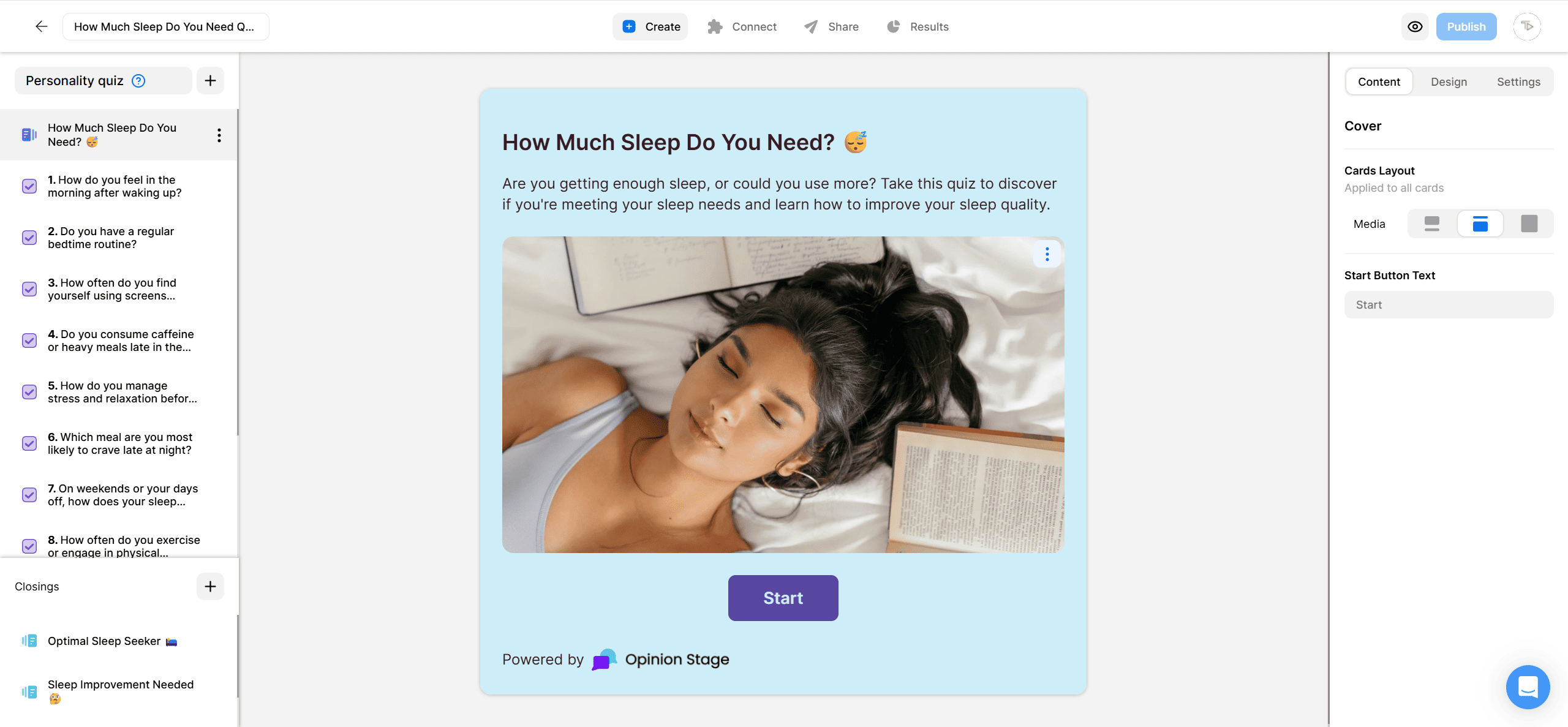
Modern quiz tools make this much easier than most people expect. Platforms like Opinion Stage are built for marketers and business owners, not developers. You can create fully branded quizzes quickly, without code, design work, or a learning curve. The process is simple and, honestly, fun. Once your quiz is live, you can use engagement data to decide where to expand next.
Final Thoughts: Quizzes as an SEO Multiplier
Search brings attention, but attention alone isn’t enough. Quizzes give that attention direction.
They help visitors move from uncertainty to clarity, from interest to action, and from quick visits to meaningful interaction. And importantly, they do this without requiring more pages or more complexity.
With quiz software, adding this kind of interaction is no longer a heavy lift. Marketers and business owners can create quizzes quickly, customize them to fit their brand, and place them directly on high-impact pages where engagement matters most.
When used intentionally, quizzes don’t replace SEO. They make the work you’ve already done perform better.
Create Interactive Experiences in Minutes