June 2020 Quiz
The mystery of the Most Holy Trinity is the central mystery of Christian faith and life, and everything in Christianity is based upon this dogma.
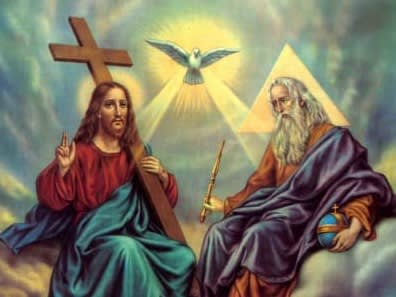
"The mystery of the Most Holy Trinity is the central mystery of Christian faith and life. It is the mystery of God in himself. It is therefore the source of all the other mysteries of faith, the light that enlightens them. It is the most fundamental and essential teaching in the 'hierarchy of the truths of faith.' The whole history of salvation is identical with the history of the way and the means by which the one true God, Father, Son and Holy Spirit, reveals himself to men 'and reconciles and unites with himself those who turn away from sin.'"
SOURCE: Catechism of the Catholic Church, #234
On June 30th, we celebrate the feast day of the First Holy Martyrs of the Holy Roman Church who were put to death in Jerusalem for converting at Pentecost.
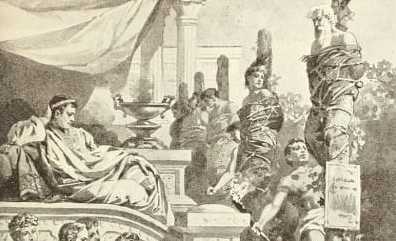
These “proto-martyrs” of Rome were the first Christians persecuted and killed en masse by the Emperor Nero in the year 64, before the martyrdom of Saints Peter and Paul. Nero blamed the fire that burned down much of Rome that year on the Christians. He put them to death by crucifixion and other cruel methods.
SOURCE: catholicnewsagency.com/saint/the-first-holy-martyrs-of-the-holy-roman-church-502
We celebrated Pentecost on Sunday, May 31, when the disciples were filled with the gifts of the Holy Spirit. Select from the list which is NOT one of the seven gifts of the Holy Spirit that descend upon us at our confirmation.






The effect of the sacrament of Confirmation is the full outpouring of the seven gifts of the Holy Spirit as once granted to the apostles on the day of Pentecost. These gifts, which “complete and perfect the virtues of those who receive them,” are: wisdom, understanding, counsel, fortitude, knowledge, piety, and fear of the Lord.
SOURCE: Catechism of the Catholic Church, CCC#1302 & CCC#1831
The month of June falls within the liturgical season of...
Name this Book of the Bible: Which Gospel was written by a Jewish tax-collector primarily for a Jewish Christian audience?

The Gospel according to Matthew "was written by a Jew, Matthew the tax-collector, for a Jewish Christian audience. The narrative closely follows the life of Jesus from his birth, through his ministry and unto his death and resurrection... Matthew quotes the Old Testament more than sixty times [and] thus emphasizes Jesus' continuity with and fulfillment of the Old Testament."
SOURCE: catholicnewsagency.com/resources/bible/introduction-to-the-new-testament/gospel-of-matthew
You got {number correct} / 5 answers correct, your score is {percent correct}%
You got {number correct} / 5 answers correct, your score is {percent correct}%