The Ultimate AI Quiz
Can you still trust your eyes? AI-generated images now look deceptively real – sometimes so real that even small details offer hardly any clues. In this quiz, you have to decide: is it a real photo or was it created by artificial intelligence? Test your eye for detail and find out how well you can still spot fakes.

Let's start with something easy: Which picture of a pressed plant is real?
Select at least 1 answer.


As beautiful as Image No. 2 is – it’s fake! It is one of the photorealistic images of nonexistent plants that artist Joan Fontcuberta generated using the AI model Stable Diffusion for his series “eHerbarium” (2024–2025).
It's still a breeze – or is it?! Make up your mind: Is this AI-slop, or is it just heavily edited?
Select at least 1 answer.

So, were you fooled? The doll-like, very artificial-looking figure is, of course, the result of AI and was taken from the 2025 video “Welcome to Jankspace, Babes.” In it, artists Daniel Felstead and Jenn Leung use an avatar of Julia Fox to explore today’s internet culture, which is oversaturated with AI Slop. By the way, “AI Slop” refers to text, images, videos, or music that are automatically generated by AI tools but are superficial, repetitive, and uninformative.
Which picture is fake?
Select at least 1 answer.


Trick question! Both images were generated by AI, with Image No. 1 showing a detail from the multimedia installation “The Fourth Memory” (2025) by Grégory Chatonsky. The work explores a new form of memory through generative AI models: drawing from enormous amounts of digitally stored human memories, these AI models assemble alternative content, thereby creating multiple versions of a narrative. Chatonsky conceives of his work as a tomb on an uninhabited Earth, from which various versions of himself are resurrected, brought to life by a machine.
This photo was taken entirely without AI, right?
Select at least 1 answer.

If you looked closely, you probably noticed an element that seems a bit out of place: The soccer player who has found his way into artist Hito Steyerl’s otherwise real-life footage was generated by AI. The image is a film snippet from Steyerl’s video installation “Mechanical Kurds” (2025), which references, among other things, Amazon Mechanical Turk, an online platform for outsourced microtasks. Steyerl documents the work of Kurdish clickworkers in refugee camps, where they contribute to the training of unmanned drones that may then be deployed against the very same Kurdish population. The artist traveled to the Kurdish regions of northern Iraq for her work and spoke with micro-workers and journalists on site.
Which volcanic rock was NOT created by AI?
Select at least 1 answer.


Trick question! Neither of the two stones pictured here was generated by AI. Yet one of them is fake. The image on the right shows a colorful volcanic rock; the one on the left is actually a sculpture by the artist Julian Charrière. In his series “Metamorphism” (2016), Charrière fuses computer components such as motherboards and processors with soil to create sculptural mineral formations, thereby not only raising questions about digital waste and its toxicity but also shedding light on the fundamental material and functional structures underlying AI.
What do you think: a crazy AI prompt or a crazy piece of art?
Select at least 1 answer.

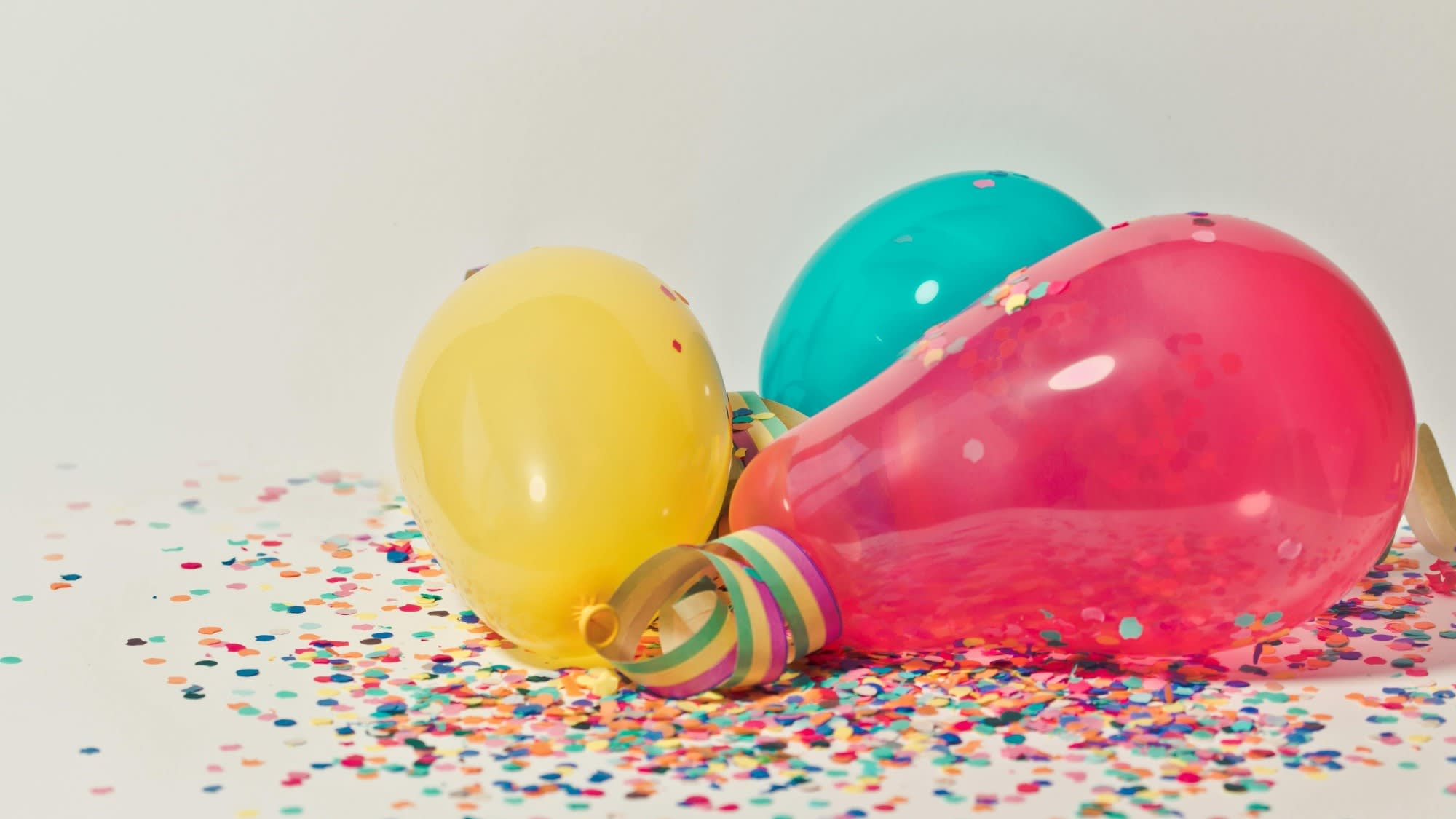
Anyone unfamiliar with Lara Favaretto’s work might have come to the wrong place. For what could easily have been a crazy AI prompt is actually an installation by the Italian artist that was shown in 2014 as part of the exhibition “Unendlicher Spaß” at the SCHIRN. What’s interesting is the meaning behind the work: At first glance, it resembles an endless party, but in fact, Favaretto frequently explores transience, decay, and the tension between celebration and decay. The constantly swirling confetti is often interpreted as a metaphor for the fleeting nature of human experiences.
Which man was actually out in the desert with his camera?
Select at least 1 answer.
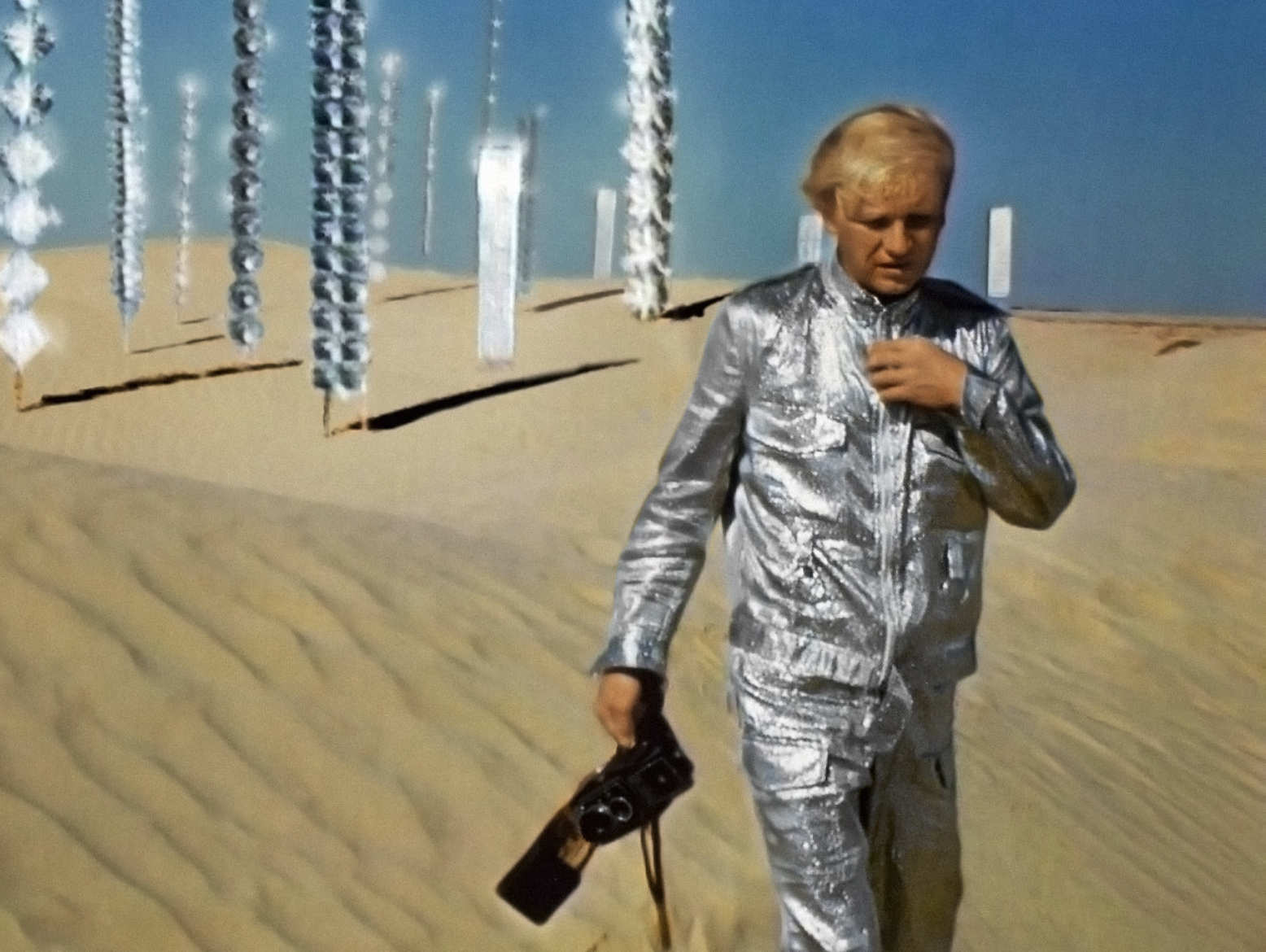

The correct answer is: The man in Image No. 1! The image shows Heinz Mack during the filming of his movie “Tele-Mack” (1968–1969). The film was made in connection with his famous Sahara Project, in which Mack brought sculptures, mirrors, light columns, and geometric objects into the desert to study the effects of light, space, and movement there. Image No. 2 is the AI’s interpretation.
Someone put a lot of effort into this cool photo shoot. What do you think — is that right?
Select at least 1 answer.
![Schirn_Presse_WTAI_Erik Bullot_Cinéma_vivant_[11]_2024_© Erik Bullot](https://opinionstage-res.cloudinary.com/image/upload/c_lfill,dpr_auto,f_auto,fl_lossy,q_auto:good,w_auto/v1/polls/tmbpaaidqwp7bkx1zqpc)
Sad but true: This image is pure fiction and part of Érik Bullot’s photo series “Cinéma vivant” (2024). The artist used the generative AI model Lexica to create it. The goal was to give photographic visibility to the “visionary program” for the future of cinema, which was developed in the 1920s by the Symbolist poet Saint-Pol-Roux.
Almost there! Which image is a real photo?
Select at least 1 answer.


Image No. 2 is the original and part of Franz Erhard’s work “Sehkanal” (1996–1970). “Sehkanal” belongs to a group of works in which Erhard makes perception itself the subject and in which his works are not merely meant to be viewed, but are intended to be activated through physical actions. The “channel” does not refer to an image motif, but rather to a structure or device that directs, limits, or brings awareness to the act of seeing. The AI attempted its own version of the motif. The result is a deceptively realistic copy: Image No. 1.
One last time, you have to decide: Does this image do without AI entirely?
Select at least 1 answer.

Did this image confuse you? Then it has served its purpose! It is a 100% authentic photograph by the Indian photographic artist Gauri Gill. The work “Untitled (74)” is from the series “Acts of Appearance” (2015-ongoing) and, at first glance, appears documentary in nature: two people are preparing vegetables in front of a house. But the masks transform this everyday scene into something surreal. The figures seem to be neither entirely human nor entirely animal. It is precisely this sense of disorientation that is central to the series.
You got {number correct}/{number of questions} correct answers
Nice try! While you may not have answered many questions correctly this time, don’t be discouraged. Trivia is all about learning and having fun, so keep playing and expanding your knowledge!

You got {number correct}/{number of questions} correct answers
Great job! You have a solid grasp of general knowledge, and your performance shows you’re quite knowledgeable in many areas. With a bit more practice, you could easily become a trivia expert!

You got {number correct}/{number of questions} correct answers
Congratulations! You have an impressive knowledge of trivia across various topics. Your excellent performance shows that you’re well-informed and have a sharp mind for facts. Keep up the great work!