Electrolyte abnormalities.

What happens to your serum potassium when you develop a metabolic acidosis?

The excess H+ in the circulation when you have a metabolic acidosis exchanges with the K+ in the cells. H+ goes into the cells, K+ comes out = elevated serum K+.
What electrolyte abnormality does the phrase "Bones, Stones, Groans, Thrones and Psychiatric overtones" refer to?

Painful bones, Renal stones, Constipation, Urinary frequency, Depression/ Confusion/ Lethargy.
What grossly elevated electrolyte is the cause of the "sine wave" appearance on this ECG?

The K was over 11mmol/l.
Which of the following is NOT a recognised treatment of elevated serum K+?

Resonium can be used to bind K in the gut when taken orally or given rectally. It takes a while to work and is certainly not given intravenously.
15yr old Anna Wood tragically died in 1995 from water intoxication after taking what tablet at a "rave" party in Sydney?

Ectasy precipitated water intoxication with life threatening hyponatremia.
One of the causes of "Euvolemic hyponatremia" is SIADH (Syndrome of Inappropriate Antidiuretic Hormone). Which of the following is consistent with SIADH?
So SIADH is low serum Sodium with inappropriately concentrated urine in the face of a low serum osmolality. Your urine Na is also inappropriately high.
Which of the following is Magnesium Sulphate IV NOT an effective treatment?

It is likely to make things worse in heart block.
A patient with a history of malignancy with bony metastases presents with high serum calcium. He has good renal function. What is the most important treatment to commence in the ED?

All of the answers may be part of the treatment of a patient with hypercalcemia however commencing rehydration is the most important thing to start with in the ED.
What electrolyte does this patient require to rapidly improve his ECG following his Tricyclic antidepressant overdose?
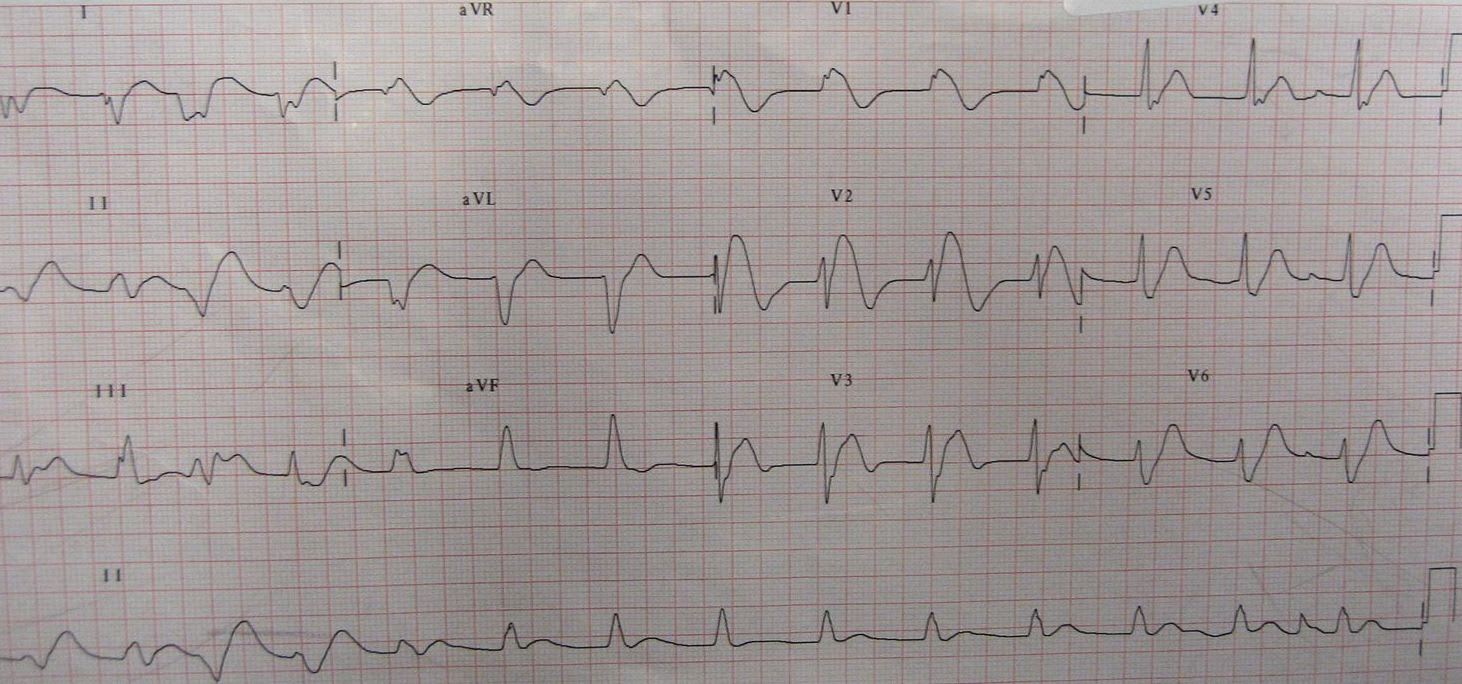
NaHC03 will narrow the QRS by alkalinizing the serum which alters the protein binding of the TCA thus decreasing the non bound TCA.
This lady is demonstrating Chvostek's sign. What is the electrolyte abnormality that causes this?
Franz Chvostek described the sign in 1876. It is where tapping on the facial nerve precipitates a twitch because of the nerve's hyperexcitabilty when you have low serum calcium.