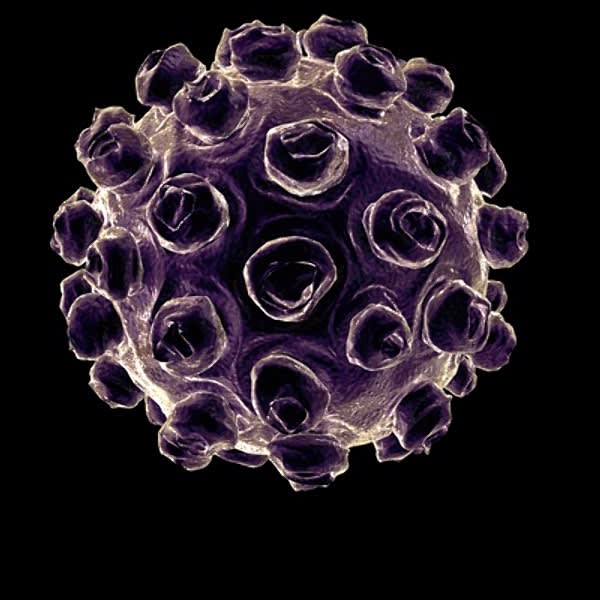
Which virus do you find most interesting in this matchup?
Ebola virus (left image), one of five species belonging to the genus Ebolavirus, is the most common cause of Ebola virus disease (EVD) in humans. It’s also the microbe responsible for the current outbreak in West Africa, which began in March 2014 and has now been going on for a year. As of March 14, 2015, 24,632 suspected and confirmed EVD cases have been reported, at least 10,159 of which were fatal. This is by far the most severe Ebola outbreak in history; between its discovery in 1976 and 2014, none had ever surpassed 500 cases. No vaccine has been approved yet, but that’s not to say we haven’t made progress. A possible vaccine, VSV-EBOV—made by genetically engineering the vesicular stomatitus virus to express Ebola virus glycoproteins—began phase I clinical trials in the U.S. in October 2014.
Measles virus (right image) is so contagious that one infected person will transmit it to about 90 percent of people around them. However, we’ve developed an incredibly effective and successful vaccine. Prior to 1963, measles infected an estimated 3 to 4 million people in the U.S. each year; by 2000, it was declared eliminated from the country. This means that the disease is no longer endemic, although sporadic outbreaks can and do still occur. In the past couple of years, the U.S. has seen a dramatic spike in the frequency of measles cases. Most recent outbreaks, including the one that’s so far been responsible for 130 cases this year, spread among groups of people who are unvaccinated.