Adult CPR.

With a witnessed "in hospital" cardiac arrest and a shockable rhythm when should adrenaline FIRST be administered according to standard ALS guidelines?

As you could probably guess the priority in a cardiac arrest with a shockable rhythm---shock it as soon as you safely can.
A 32yr old lady in cardiac arrest has "torsades de pointes" on her monitor. What medication should be administered after she has been defibrillated to sinus rhythm?

Torsades de Pointes is a polymorphic VT. Defibrillation should be unsynchronised. The patient has a long QT interval and Magnesium assists with that. Amiodarone is NOT a good idea as it will worsen the prolonged QT interval.
Which of the following best describes optimal chest compressions in an adult during CPR?

A good technique with appropriate rate and depth is important for effective circulation.
A 58yr old man collapses in the ED waiting room. He is pulseless and apnoeic.The monitor shows Ventricular Fibrillation (VF). After the first shock what is the next immediate step?

Even if the patient is defibrillated to sinus rhythm the patient will often have poor cardiac output initially.
Which of the following songs would NOT be recommended to use as a beat to accompany your performance of chest compressions?

You want a beat of between 100 and 120/min. Someone like you is 67/min. I was tempted to put in "My heart will go on" but it is 99/min--so a smidge under 100/min.
What is the "D" in the COACHED algorithm?

Continue Chest Compressions, Oxygen away, All clear except chest compressions, Charging, Hands off, Evaluate rhythm, Deliver shock or disarm.
Not exactly catchy but important to keep all the team on the same page.
During Advanced Life Support the End Tidal C02 has a sudden rise from 12mmHg to 40mmHg. What is the most likely cause of this?

The rapid increase in circulation carries the stored C02 to the lungs which is noted on the End tidal C02 monitor. Lucky.
Which reversible cause of cardiac arrest is most likely in a dialysis patient with a broad complex PEA (Pulseless Electrical Activity)?

The hyperkalemia needs to be aggressively treated to re establish cardiac output.
During CPR for Pulseless Electrical Activity (PEA) which intervention has the strongest evidence for improving survival?
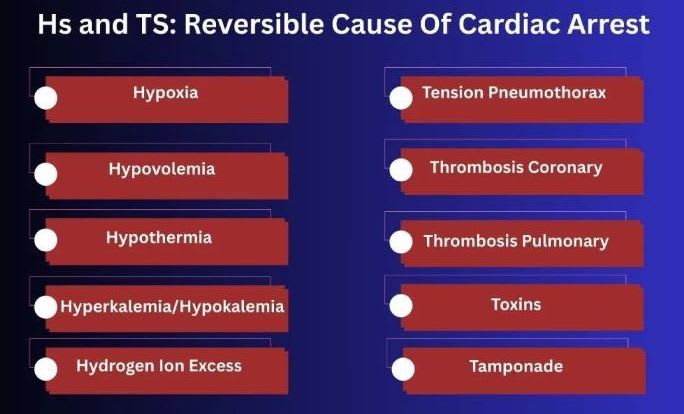
In specific circumstances thrombolysis may be warranted (eg high suspician for massive PE) but not to all patients. Do good CPR and look for reversible causes.
In veterinary medicine what is the name of the group that develops their resuscitation guidelines?
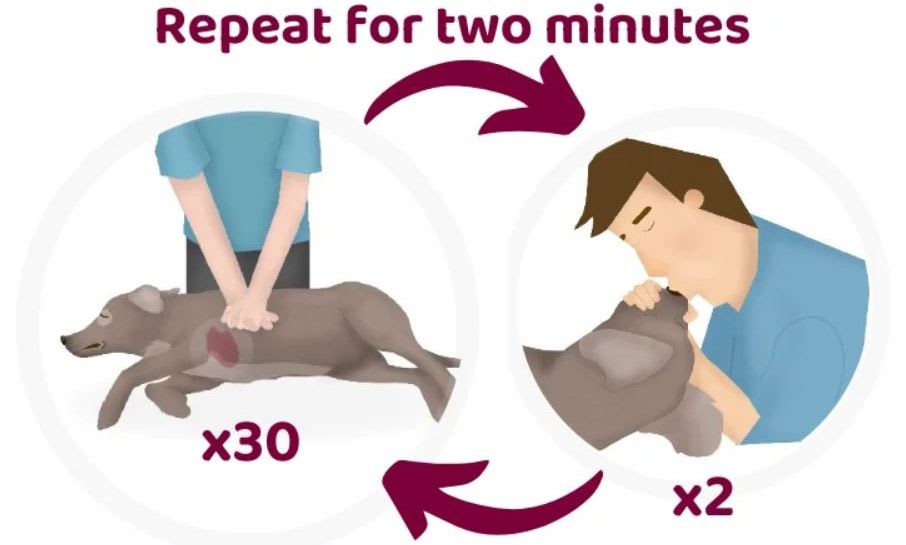
Yes animal resuscitation guidelines do exist, much like ALS. Obviously there are technical challenges with larger animals as well as different physiology (think birds). Most of the work seems based around dogs.