Quiz: New Myeloma Research from IMS 2025
The International Myeloma Society (IMS) 22nd Annual Meeting and Exposition took place September 17-20, 2025, in Toronto, Ontario, Canada. There, myeloma experts from around the world gathered to give and view presentations of the latest clinical research in myeloma.
Are you caught up on your colleagues’ latest work? Start our quiz!
Question #1
The phase 2 STEM trial is an evaluation of cevostamab consolidation after BCMA chimeric antigen receptor (CAR) T-cell therapy (CAR-T) for relapsed or refractory multiple myeloma. According to interim results from the trial, _____ of enrolled patients at 1 year after undergoing CAR-T had achieved a measurable residual disease (MRD)–negative complete response (CR).
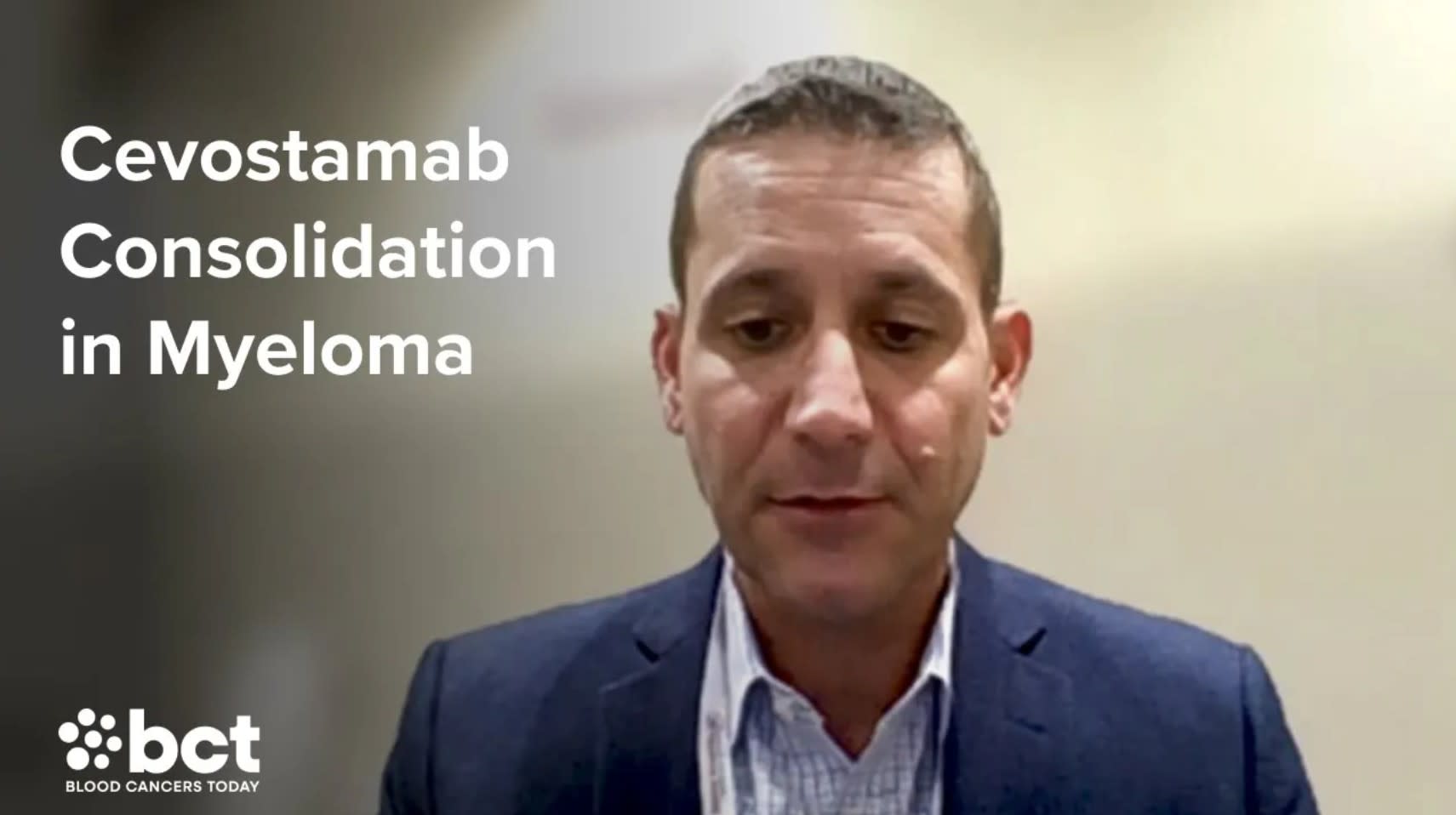
Blood Cancers Today spoke with Adam Cohen, MD, from Penn Medicine, who presented preliminary STEM trial results data at the 22nd IMS Annual Meeting. Among these data were that 93% of enrolled patients achieved MRD-negative CR at 1 year after undergoing CAR-T.
Question #2
The phase 2 MajesTEC-5 trial evaluated two induction therapy triplet regimens for transplant-eligible, newly diagnosed multiple myeloma: teclistamab combined with daratumumab plus lenalidomide or with daratumumab plus bortezomib. Which of the following statements is TRUE about the trial results?

Blood Cancers Today reported that results from the MajesTEC-5 trial were presented at the 22nd IMS Annual Meeting by study first author Marc Raab, MD, from the Heidelberg Myeloma Center in Germany. According to Dr. Raab, nearly all patients in the trial experienced hypogammaglobulinemia, but none experienced any immune effector cell–associated neurotoxicity syndrome events that forced treatment discontinuation. Moreover, those patients who received bortezomib did not have an increased rate of thrombocytopenia.
Question #3
According to myeloma treatment data from the PERSEUS and CEPHEUS trials, adding daratumumab to bortezomib plus lenalidomide and dexamethasone (VRd) results in __________ prevalence of infection.
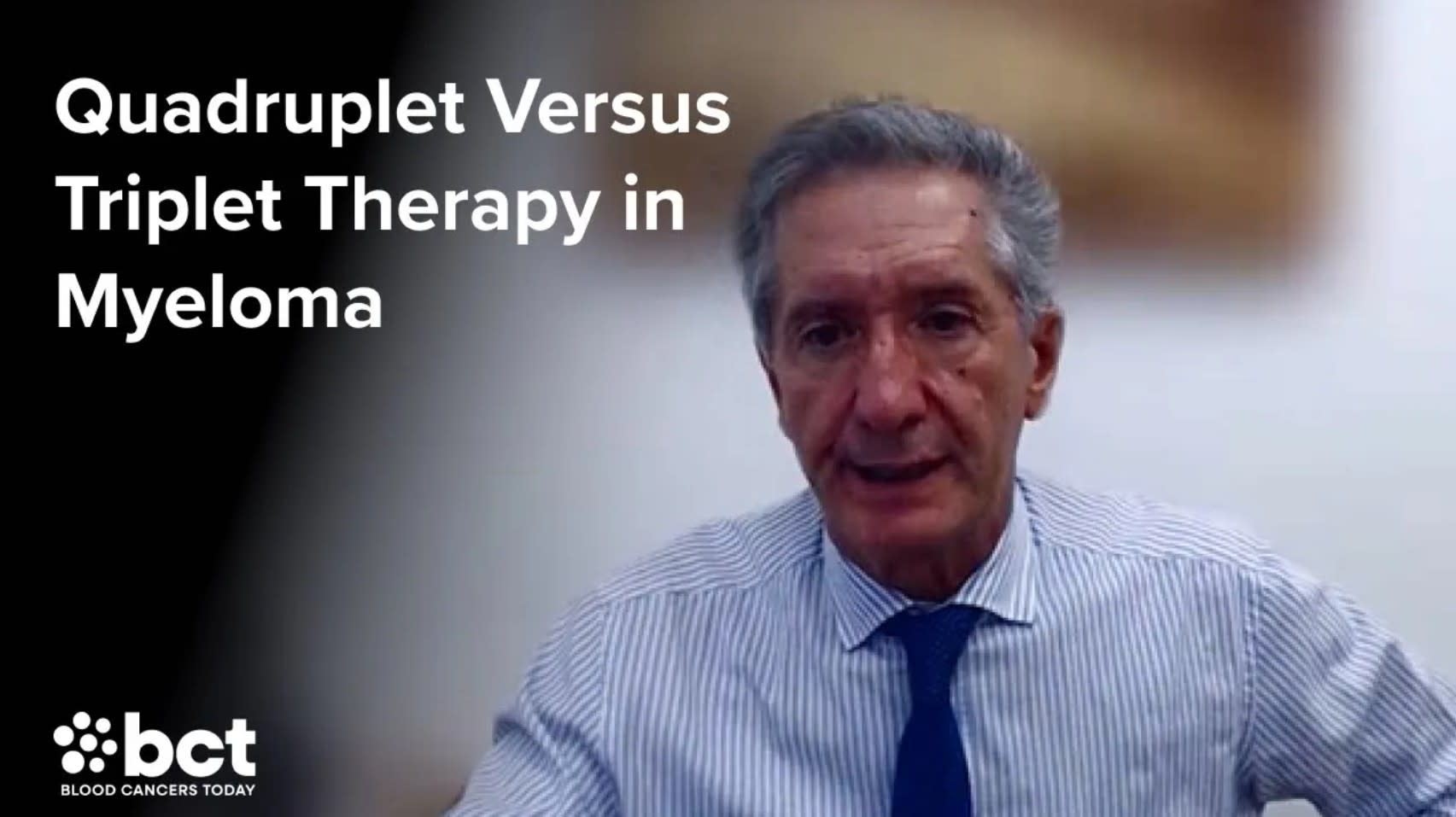
Myeloma treatment comparison data from the PERSEUS and CEPHEUS trials were presented at the 22nd IMS Annual Meeting by Jesús San-Miguel, MD, PhD, of Clínica Universidad de Navarra. As Dr. San-Miguel explained in an interview with Blood Cancers Today, daratumumab plus VRd and VRd alone are comparable overall in safety, but the former carries a slightly higher incidence of infection.
Question #4
In a comparison of idecabtagene vicleucel (ide-cel) with standard treat-to-progression regimens for relapsed or refractory multiple myeloma, researchers carried out an analysis of the phase 3 KarMMa-3 trial measured quality of life (QOL)–adjusted event-free survival (EFS). This QOL-adjusted EFS, as defined in the analysis, was found to be longer with __________.

The first author of the KarMMa-3 analysis, Krina Patel, MD, MSc, from the University of Texas MD Anderson Cancer Center spoke with Blood Cancers Today about its findings, which she presented at the 22nd IMS Annual Meeting. Her team’s analysis indicated that ide-cel produced not only significantly longer EFS than standard regimens but also longer QOL-adjusted EFS.
Question #5
The phase 2 LINKER-MM1 study is under way to determine whether, in patients with high-risk smoldering multiple myeloma, early intervention with linvoseltamab can delay disease conversion to active multiple myeloma. In its early results, _________.
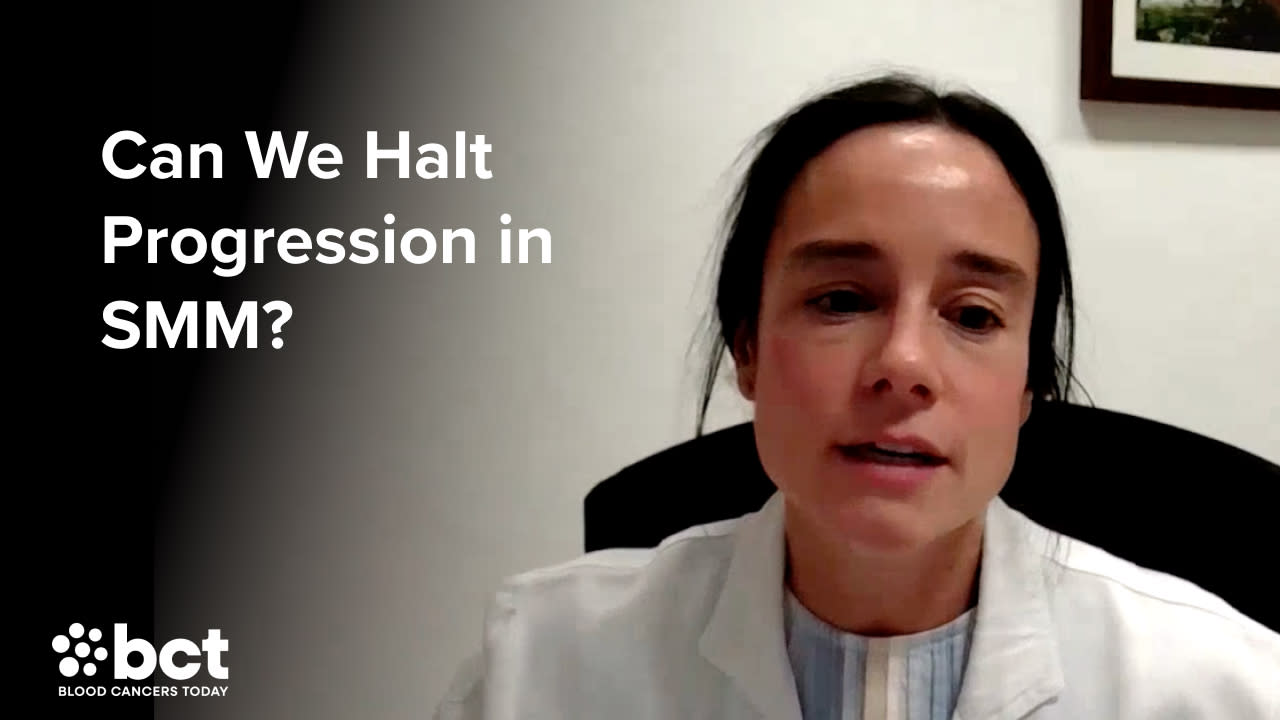
At the 22nd IMS Annual Meeting, Paula Rodríguez-Otero, MD, PhD, from the University of Navarra in Madrid, Spain, spoke with Blood Cancers Today about early results reported from the LINKER-MM1 study. Of the study’s first 24 patients, all who were evaluable for efficacy had a response to linvoseltamab. Safety observed for the bispecific antibody in the 24 patients has been more favorable than in use of the agent for relapsed or refractory multiple myeloma, and no patients have discontinued the study treatment.
{number correct}/{number of questions} correct answers
Thank you for taking our quiz!
Remember that Blood Cancers Today is keeping you up to speed all year round with the latest clinical research news on myeloma and more of the hematological malignancies that affect your patients.
Being informed makes all the difference!